
How to Board the Shinkansen: Step-by-Step Guide for First-Timers
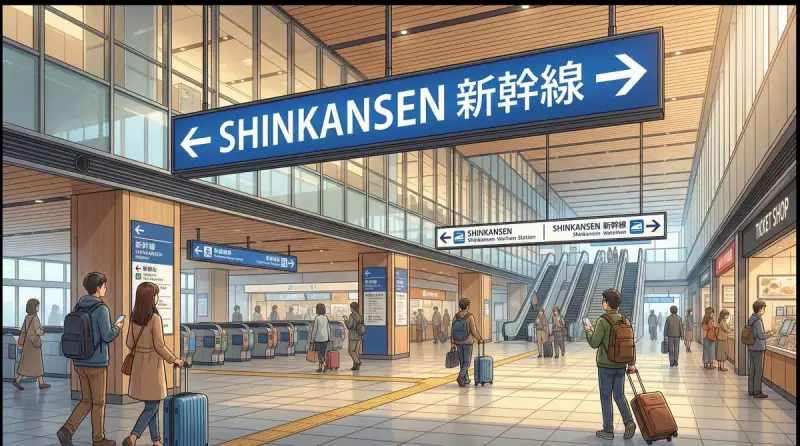
How to Board the Shinkansen in 5 Steps
- Buy or collect the correct ticket before entering the Shinkansen area.
- Follow signs to the Shinkansen gates and use the QR code or ticket method shown in your confirmation.
- Check the departure display for your train, platform and departure time.
- Find the floor marker for your car number and queue behind the line.
- Board promptly, place luggage safely and sit in the seat printed on your reserved ticket.
Japan's Shinkansen, or bullet train, is more than just transportation—it is a global icon of efficiency, punctuality, and technological excellence. Connecting major metropolises like Tokyo, Kyoto, and Osaka at speeds of up to 320 km/h (200 mph), the Shinkansen is the preferred choice for domestic travel. This comprehensive guide simplifies the process of buying Shinkansen tickets online, navigating stations, and boarding your train for a stress-free Japanese rail experience.
Understanding Shinkansen Ticket Types and Classes
Shinkansen pricing is unique. Unlike local trains, a bullet train journey requires two specific fares, often printed on a single ticket or issued as two separate slips: the Base Fare and the Limited Express Supplement.
Seat Classes and Service Levels
Compare the options in our Shinkansen seat classes guide before booking.
When booking, you must choose between three primary classes of service:
| Seat type | What it includes | Best for |
|---|---|---|
| Non-Reserved (自由席, Jiyūseki) | First-come, first-served seating in designated cars; no assigned seat number. | Flexible travelers outside busy periods. |
| Reserved (指定席, Shiteiseki) | A guaranteed seat in a specific car with a seat number. | Most visitors, groups and peak-period travel. |
| Green Car (グリーン車) | Wider seats, extra legroom and a quieter premium cabin. | Travelers prioritizing space and comfort. |
Note: Some lines also offer GranClass, an ultra-premium cabin with airline-style first-class service and gourmet meals.
How to Buy Shinkansen Tickets
Whether you prefer booking in person or online, there are three main ways to secure your seat:
1. At the Station (Ticket Machines & Offices)
Major JR stations feature Multilingual Ticket Vending Machines that accept cash and international credit cards. For complex itineraries or group bookings, visit the JR Ticket Office (Midori-no-madoguchi) to speak with a staff member.
2. Online Reservation Platforms
Official platforms allow you to book Shinkansen tickets online from your smartphone and often provide QR codes for entry, saving time at the station.
3. Using the Japan Rail Pass
The Japan Rail (JR) Pass offers unlimited travel on most trains. While it covers the Shinkansen, pass holders cannot use the "Nozomi" or "Mizuho" trains without paying an additional upgrade fee. Seat reservations for pass holders are free and can be made at ticket machines or offices.
Step-by-Step Guide to Boarding
If your booking requires collection, read the Shinkansen ticket pickup guide before going to the gate.
Japanese stations are designed for high-volume efficiency. Follow these steps to ensure a smooth boarding process.
Step 1: Locate the Shinkansen Gates
Follow the prominent blue Shinkansen signs. In massive hubs like Tokyo Station, pay close attention to the specific line name (e.g., Tokaido Shinkansen vs. Tohoku Shinkansen), as they have separate gate areas.
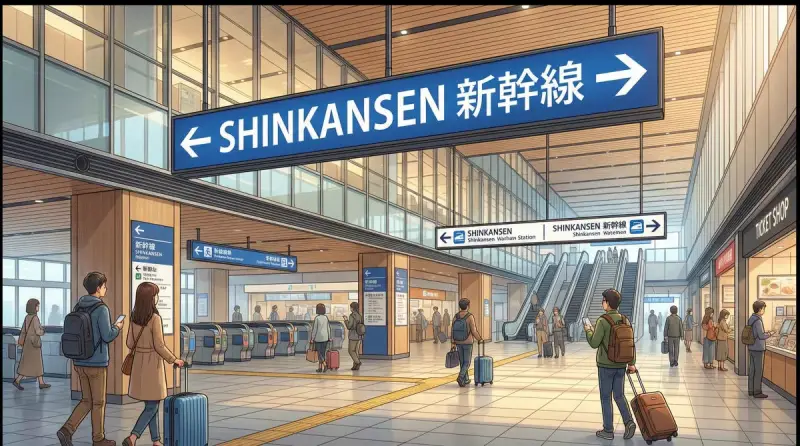
Clear bilingual signage directs passengers to the dedicated Shinkansen gate areas.
Step 2: Passing Through the Ticket Gates
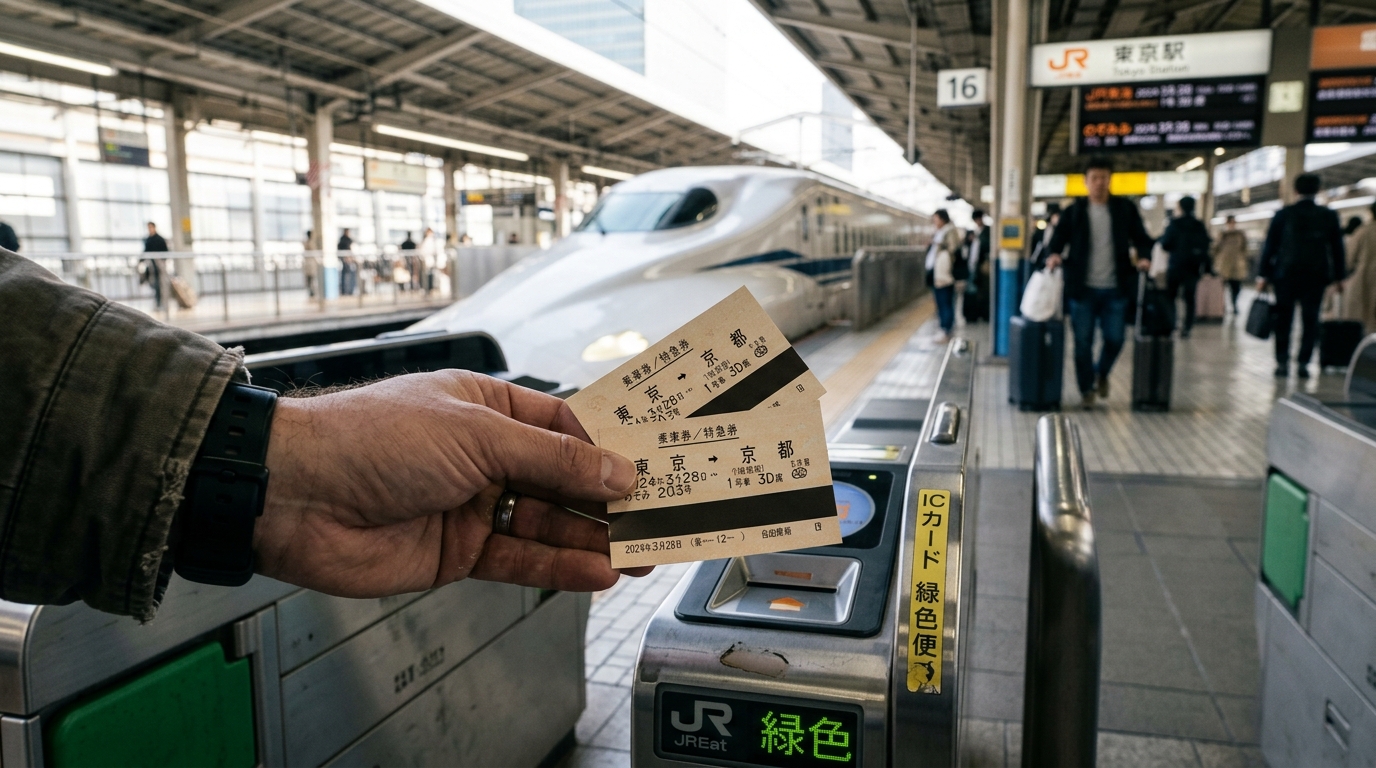
The Shinkansen uses a dual-gate system. If you entered the station through a local gate, you will encounter a second set of "transfer gates." Insert both your Base Fare and Supplement tickets into the slot simultaneously. Don't forget to retrieve them—you will need them to exit at your destination.
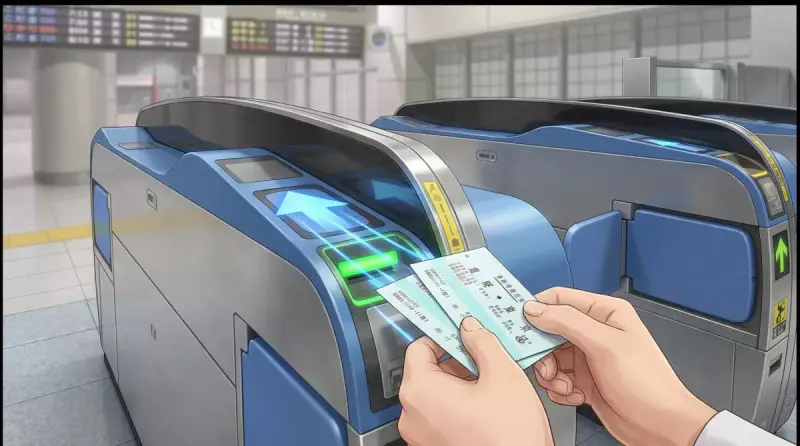
Insert all tickets at once; the machine will process them and return them for your exit.
Step 3: Finding Your Platform and Car Number
Check the electronic departure boards for your train’s name (e.g., Nozomi 23), departure time, and platform number. Once on the platform, look at the ground or overhead signs to find your specific Car Number (号車, Gōsha). Japanese passengers queue in orderly lines at the designated floor markings.
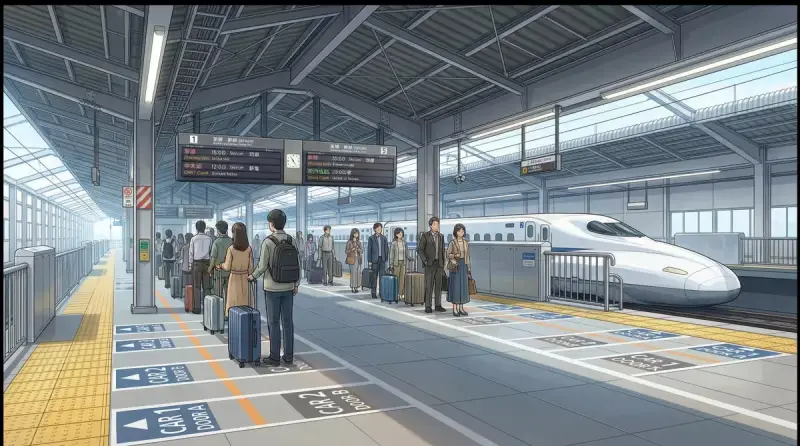
Platforms are clearly marked with car numbers and queuing lines to ensure organized boarding.
Step 4: Boarding and Seating
Wait for the train to come to a complete stop and allow arriving passengers to exit first. Once inside, locate your seat (lettered A-E). Overhead racks provide space for small luggage. For oversized baggage, use the designated areas behind the last row of seats (reservation may be required).
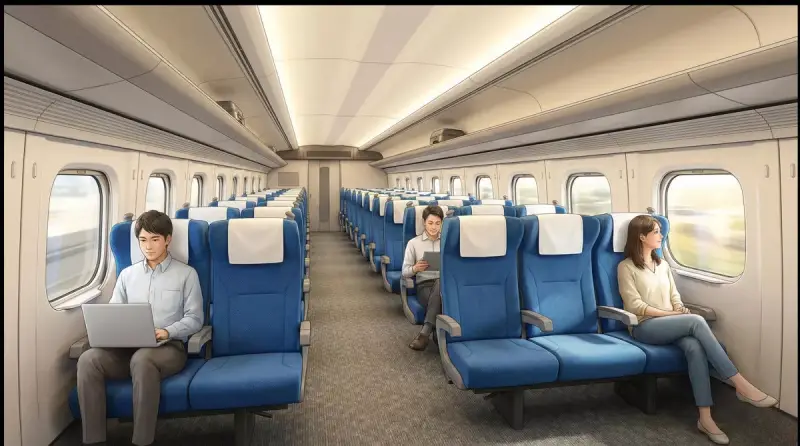
Shinkansen interiors offer ample legroom, tray tables, and reclining seats for a comfortable journey.
Onboard Experience and Etiquette
To maintain the Shinkansen’s famous "Zen" environment, passengers are expected to follow specific etiquette: keep noise to a minimum, set mobile phones to silent mode, and dispose of trash in the bins located between cars.
Ready to travel? Search Shinkansen routes and ticket options for your journey.
Conclusion
The Shinkansen is more than a mode of transport; it is the backbone of Japanese travel. By understanding the ticket structure and following the intuitive station signage, you can navigate the country with speed and ease. From the iconic Mount Fuji views on the Tokaido line to the snowy landscapes of Hokkaido, the bullet train ensures your journey is just as memorable as your destination.
![How to Pick Up Shinkansen Tickets: Skip 45-Min Lines [2026]](https://static.trainbook.online/images/articles/cover-1774027511628.png)
![Shinkansen Family Tickets & Group Booking: How to Sit Together [2026]](https://static.trainbook.online/images/articles/cover-1774028141349.png)